Showing posts with label Social Media. Show all posts

Sunday, 20 January 2013

The next big resource? Harnessing Digital Youth in rural Canada


image courtesy of creative commons
After a five year hiatus, I have started doing some work again in the area of rural youth, a critical issue for rural communities. One of the projects I am working on focuses on the importance of digital skills and the knowledge-based economy for rural youth. Economic development in rural Canada is based on resource development and economic opportunities are often developed based on the discovery of new or untapped resources and it seems that one of those untapped resources, especially in recent years is rural youth and their digital know-how. 

The value of digital youth
Digital youth represent an enormous resource that is that is unrecognized by businesses and communities. Youth have an almost inherent or natural understanding of digital technology. In his book Grown up Digital, Don Tapscott identifies that the digital immersion and upbringing of today's youth have created a generation of people that live and breath technology, a generation that has an intrinsic understanding of how to use the internet to search for information, communicate, and generate content. 

Unfortunately these skills and opportunities for youth are not often realized or acted on. A study by the telecommunications provider O2 valued the digital skills of 1 million unemployed youth in the United Kingdom at more than $10.5 billion in Canadian dollars. With the continued rise of the knowledge economy, the importance of digital skills will also keep growing, meaning this valuation of digital skills will only increase. Locally, a labour study in Portage la Prairie, Manitoba identified that computer skills are essential for all but the most unskilled jobs while at the same time youth are over-represented in those unskilled jobs with 83% of all youth under 25 being employed in unskilled jobs in the service sector. While digital skills are in high demand for operating and competing in an increasingly digital economy, there is not a significant recognition of the value of youth’s digital literacy or the opportunities right in front of rural communities. Digital youth are invaluable resource that businesses and organizations in rural communities are sitting on top of, a resource that has not been tapped and is in high demand.    

Developing a digital resource
Typically, youth need to migrate to urban centres to find appreciation and employment related to their digital skills. Richard Florida's urban focused creative economy model i based in part on the fact that creative, knowledge-based employment opportunities are only available in select urban areas. Creating digitally-related opportunities in rural communities could address two rural challenges at the same time: economic development and youth retention. 

Rural communities are always looking for additional or new economic opportunities, striving to maintain or grow the local economy as resource levels and commodity prices fluctuate. Building digital capacity is also an essential requirement for communities to participate in the knowledge-economy.  of effectively part. In addition, retaining their population, especially youth population is another challenge for many rural communities. Harnessing the natural resource of their youth's digital capacity creates opportunities to address both economic development and youth retention for rural communities.  

Organizations and businesses in rural communities can take advantage of their digital youth through creating or hiring youth for employment opportunities related to web development, information searchers and social media; through entrepreneurship support that encourages youth to start digital businesses in rural communities; and through engaging youth in community projects and organizations in roles that build a digital presence and effectively use social media.  

Some initiatives such as the Digital Youth Academy are already starting to mine this resource and create opportunities for youth, setting up internships that build on the natural digital capacity of youth and provide essential skills for businesses and organizations. Rural communities in Canada can do something similar and create local opportunities for digital youth to find employment and to get recognition for their skills, developing economic opportunities while providing youth opportunities and incentives to stay.  


Sources:
Florida, R. (2002). The Rise of the Creative Class. New York: Basic Books.
Tapscott, D. (2009). Grown Up Digital: How the Net Generation is Changing Your World. McGraw-Hill. 

Friday, 6 January 2012

Social Media is here to stay; time to get on the bandwagon

courtesy of dknyprgirl


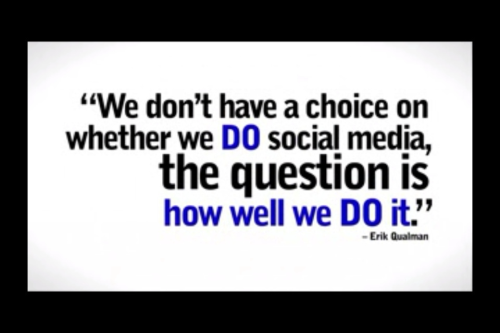
Social media is now part of how organizations, companies and society operate. Organizations big and small, urban and rural, tech savvy and tech adverse, can no longer ignore or avoid the importance and impact of social media. As I continue to explore what ICT can mean for rural development, the role of social media is quickly becoming a central part of that exploration. As a result, I am increasingly immersed in social media, expanding beyond the longtime facebook presence and establishing more comprehensive profiles and a more active presence in the other main networks including Google+, LinkedIn, Twitter and most recently Pinterest.

Not surprisingly my network of colleagues, friends and family have also been increasing their engagement in social media and I have quickly found that I many of the same connections online as I have offline. However, one of the main differences with social networking is that it is designed to expand your network beyond those people you know face to face, while also greatly facilitating the exchange of knowledge, ideas and even people.

Now, in addition to my current ‘real-world’ or offline network, I have in my ‘circles’, am ‘following’, ‘friends with’, ‘connected-to’, and ‘re-pin’ leaders and practitioners in development, research, technology and even spirituality. The knowledge that flows through my social network on a daily basis is very informative and inspiring. The network of experts and practitioners at my fingers tips to learn from and share with grows daily and far exceeds what I could’ve achieved a few short years ago before social media. All of this has affirmed that rural communities and organizations need to insure that they are also on the social media bandwagon as the dangers of missing it are now too significant to ignore. 

The Social Media “Push”
One of the key benefits of social media is the ability to easily and effectively share information, knowledge and ideas with others. Rural communities are no longer affected by being isolated from networks, businesses, stakeholders or even prospective residents. Social media allows rural communities and organizations to promote themselves and to share their information in a much more effective manner than ever before. As an example, a rural community that posts an event on their website relies on users to come to the website to be aware of the event. While websites are still a very important tool, social media creates a dynamic network of interested participants who are waiting for information to be sent to them and many of whom are willing and wanting to forward that information to their extended networks. A study by the market research company AYTM study indicates that 57% of users on facebook have more than 100 friends and 25% of users on twitter have more than 100 followers; the community event notice can reach thousands of people through social networking in the time it takes dozens to visit the community website. 

The Social Media “Pull”
For those communities and organizations that are not producing lots of content or not ready to share information regularly, social media provides a window into a cycle of knowledge exchange, idea generation and discussion that is seemingly endless in terms of the topics available and in the constant evolution of this content. Social networks are a fantastic source of knowledge and you can find participants, experts and groups of participants and experts that provide a wealth of information. Through social media, rural communities and organizations can easily follow the latest discussions on relevant topics and be up to date on news, events and announcements related to them or their economies. Rural businesses can know what their customers want and what their competition is doing as it happens.

The Social Media “Access” to Talent
One of the most significant indicators of the importance of social media, is the rapid evolution of employee recruitment and hiring. According to Careerenlightnement.com an amazing 91% of companies are now using social media in some manner for recruiting. Recruiters are using social media, primarily facebook and LinkedIn, to verify qualifications, to get a better understanding of applicants’ interests and expertise and to determine if there are any potential character issues. Many companies are basing decisions on what they find as 68% of companies having hired or rejected applicants based on social media. As a result, job hunters are focusing their job searches, networking efforts and communication activities on social media. If rural companies and communities are not engaged in social media, they are going to find that talent is harder and harder to find as potential employees are no longer searching and applying for jobs in the same manner any more. 


Sources