 |
| Photo courtesy of mikeleeorg (flikr) |
Tuesday, 5 June 2012
Want a good return on your money? Try investing in Highspeed Rural Internet

Wednesday, 9 May 2012
Recipe for Rural Community Development in the New Economy
 The recipe for rural development
in the new economy is based on three key ingredients of knowledge, innovation
and leadership. Various types of economic and social development in rural
communities will require these three elements to be successful. An important
starting point is to understand what each of these key ingredients are and how
they play a role in the development of rural communities.
The recipe for rural development
in the new economy is based on three key ingredients of knowledge, innovation
and leadership. Various types of economic and social development in rural
communities will require these three elements to be successful. An important
starting point is to understand what each of these key ingredients are and how
they play a role in the development of rural communities. Thursday, 1 March 2012
Convergence: bring all our ICT together to create new innovation and opportunities; now lets do the same for urban-rural
As part of my research manager duties at Brandon University, I was fortunate enough to attend the TRLabs Convergence conference in Winnipeg. The topic of convergence refers to the coming together of media, merging ICT experience and activities into a seamless experience. The day was spent looking at this convergence in ICT and exploring how it is going to impact our lives in the next 5-10 years. Many ideas and directions were discussed, revealing how the integration of technology in our lives is going to continue to increase. It's an exciting time and all of the speakers agreed that we are moving towards a society with more wireless devices that are used more and more throughout our lives, making existing activities easier and more efficient while letting us do completely new activities and interactions as well.
Wireless devices are already transforming how we work, play and communicate and this will continue with further integration of wireless devices into our lives. Many of the presenters talked about how blended or seamless experiences will continue to improve work, play and communication with networks working effortlessly to transfer content and data between devices and locations whether it be on our computers, smartphones, televisions or tablets. From working on documents to taking phone calls to watching movies or reading the news, our lives are going to increasingly get easier and easier as we are able configure how and where we want to do these activities. Presenters also agreed that many of these innovations are already here and that they will just continue to improve and become more widespread.
In addition to further integration and innovation around our current mobile devices, trends indicate that we are going to see a proliferation of wireless devices in our lives, from smart cars, smart appliances and smart apparel to RFID stickers that can be put on anything such as furnaces, pets and even toothbrushes. One presenter indicated that Ford is showcasing automobiles with monitored driver seats that can help control the car in the event of a driver heart attack. Another example provided home communication solutions that let families talk and video effortlessly with each other no matter where they were or what device they were using.
The unifying factor in all of these innovations and trends was the need for a strong connection to the Internet as the data demand from our devices grow. Not only will these innovations and devices require a strong Internet connection, there are is going to be an explosion of wireless devices putting further demand on our Internet infrastructure. A CISCO study was cited which predicted there will be more than 50 billion Internet connected devices by the year 2020, an average of 6.6 devices per person, far beyond the current average of 1.5 devices per person globally today. To put the speed of wireless device growth in perspective, it was only 5 years ago that there were more people than wireless devices and in 8 years from now there will be more than 6 times the number of devices as people.
As I listened throughout the day and as I thought about what I had learned, one question kept coming back to me: how do rural communities fit into this? I'm fortunate enough to have a solid Internet connection in my rural city of Portage la Prairie and I will be able to participate and enjoy society's increasing innovation and blended experience. Like many people, I already do some of these things; I use my smartphone as my alarm clock and to track exercise, I use a tablet for work and entertainment and we use our TV for watching movies from Netflix as often as watching regular TV.
I look forward to what's next in further integrating technology into our lives, but again I am fortunate enough to have the Internet connection to be able to participate in our changing reality. Just 10 or even 5 kilometers outside of my city though, people do not necessarily have the same ability. Having just recently explored the differences in broadband speeds, I know that just 5 km away, people can have difficulty accessing 5Mbps high speed, speeds that are 5 times slower than what myself and other urban residents in Manitoba are able to access.
As the Convergence conference illustrated, all indications are that we are going to increase our connectedness exponentially, both through our existing devices and by the explosion of new devices that become integrated into our lives. While the merits of being able to watch TV seamlessly on all our devices can be debated, the benefits to areas like health and education are exciting and promise to continue improving society. The unfortunate reality though is that not all rural communities and residents are currently able to realize the benefits of those innovations. As demands on Internet connections increase, those without Internet or with slower connections will be the first to miss out on the potential benefits. Ironically, rural communities are some of those places that would benefit the most from health, education and communication innovations, helping to address both geographic and demographic challenges. It will be important for Manitoba and Canada as a whole to think about and plan for this increasing connectedness and to increase efforts to make sure that all rural communities and residents are able to benefit from the related improvements and opportunities along with their urban neighbours.
Wireless devices are already transforming how we work, play and communicate and this will continue with further integration of wireless devices into our lives. Many of the presenters talked about how blended or seamless experiences will continue to improve work, play and communication with networks working effortlessly to transfer content and data between devices and locations whether it be on our computers, smartphones, televisions or tablets. From working on documents to taking phone calls to watching movies or reading the news, our lives are going to increasingly get easier and easier as we are able configure how and where we want to do these activities. Presenters also agreed that many of these innovations are already here and that they will just continue to improve and become more widespread.
In addition to further integration and innovation around our current mobile devices, trends indicate that we are going to see a proliferation of wireless devices in our lives, from smart cars, smart appliances and smart apparel to RFID stickers that can be put on anything such as furnaces, pets and even toothbrushes. One presenter indicated that Ford is showcasing automobiles with monitored driver seats that can help control the car in the event of a driver heart attack. Another example provided home communication solutions that let families talk and video effortlessly with each other no matter where they were or what device they were using.
The unifying factor in all of these innovations and trends was the need for a strong connection to the Internet as the data demand from our devices grow. Not only will these innovations and devices require a strong Internet connection, there are is going to be an explosion of wireless devices putting further demand on our Internet infrastructure. A CISCO study was cited which predicted there will be more than 50 billion Internet connected devices by the year 2020, an average of 6.6 devices per person, far beyond the current average of 1.5 devices per person globally today. To put the speed of wireless device growth in perspective, it was only 5 years ago that there were more people than wireless devices and in 8 years from now there will be more than 6 times the number of devices as people.
As I listened throughout the day and as I thought about what I had learned, one question kept coming back to me: how do rural communities fit into this? I'm fortunate enough to have a solid Internet connection in my rural city of Portage la Prairie and I will be able to participate and enjoy society's increasing innovation and blended experience. Like many people, I already do some of these things; I use my smartphone as my alarm clock and to track exercise, I use a tablet for work and entertainment and we use our TV for watching movies from Netflix as often as watching regular TV.
I look forward to what's next in further integrating technology into our lives, but again I am fortunate enough to have the Internet connection to be able to participate in our changing reality. Just 10 or even 5 kilometers outside of my city though, people do not necessarily have the same ability. Having just recently explored the differences in broadband speeds, I know that just 5 km away, people can have difficulty accessing 5Mbps high speed, speeds that are 5 times slower than what myself and other urban residents in Manitoba are able to access.
As the Convergence conference illustrated, all indications are that we are going to increase our connectedness exponentially, both through our existing devices and by the explosion of new devices that become integrated into our lives. While the merits of being able to watch TV seamlessly on all our devices can be debated, the benefits to areas like health and education are exciting and promise to continue improving society. The unfortunate reality though is that not all rural communities and residents are currently able to realize the benefits of those innovations. As demands on Internet connections increase, those without Internet or with slower connections will be the first to miss out on the potential benefits. Ironically, rural communities are some of those places that would benefit the most from health, education and communication innovations, helping to address both geographic and demographic challenges. It will be important for Manitoba and Canada as a whole to think about and plan for this increasing connectedness and to increase efforts to make sure that all rural communities and residents are able to benefit from the related improvements and opportunities along with their urban neighbours.
Wednesday, 8 February 2012
Ingredients for e-ready communities
How
do you describe the importance of the Internet? How about its potential for
communities? That is a question I continue to try and answer after more than 10
years of working in Information and Communication Technology (ICT) and rural
development. Studies are beginning to calculate its impact with some results indicating
that the Internet is responsible for 21% of economic growth in developed
nations. Additionally, a study
from the World Bank determines that every10% point increase in penetration of
ICTs can impact economic growth by up to 1.4% for developing countries.
Unfortunately,
in attempts to explain the Internet and its importance, it often
comes across as a magic bullet that is going to solve all of the community’s
problems (something I'm guilty of on
occasion). The natural reaction to this
is a “Build it and they will come” approach by community decision makers and
governments. Many groups work hard to set up Internet infrastructure and access
in a community and then hope for change.
Regrettably,
the Internet is not a magic bullet and to fully realize its benefits,
communities need to do more than just build ICT infrastructure. While building
ICT infrastructure is a critical first step, successful adoption also requires
building digital skills, and most importantly, it requires people actively
using the Internet.
In
2001, I travelled to a northern community in Canada to help update the software
on their community access site only to discover the computer for the access
site was still in the original boxes. The local organization that had agreed to
host the access site was very appreciative of the computer, but explained
matter of fact that they had no idea how to set up the computer, and so it had
remained in the box for six months until I arrived.
More
than 10 years later, the lesson learned from this experience still holds true,
setting communities up with computers and Internet is not the only or final
step in unleashing the potential of the Internet for our rural communities.
E-Ready communities are those communities that are able to take full advantage
of the information society. In my master’s thesis on knowledge planning, I
defined an e-ready community as “a community that provides its residents,
businesses and organizations with the necessary tools and environment to be
successful in the new knowledge-based world” (Kelly,
pg 14).
As
the UN’s International
Telecommunication Union (ITU) describes,
it is the combination of ICT skills and ICT access which enables the use of ICT
and the Internet. In turn, it is using technology that results in communities
taking full advantage of the information society. Another ICT assessment is
built on this model, but Function Four Ltd.’s E-Index focuses on community level rather than national
level measurements of infrastructure, skills and use.
Communities
that want to effectively participate in the information society, to become
e-communities need to address each of these steps of infrastructure, skills and
use to fully realize the benefits of ICT. The ITU and the E-Index provide some
examples of how to determine progress towards effective engagement in the
information society with the ITU focusing on country measurements while the
E-Index concentrates at a community level.

Figure 1 ITU Measuring the Information Society 2011
Infrastructure
and access
The
ITU describes ICT infrastructure and access as the presence and availability of
computers, cell phones, fixed phone lines and Internet within a community.
While the ITU measures fixed phone lines, it acknowledges that they are
becoming less and less important for accessing the Internet and may be removed
from infrastructure measurements in the future. The E-Index, a community ICT
Index that builds locally on the ITU’s efforts, factors in the presence of more
traditional ICTs such as radios and televisions to create an overall measure of
ICT infrastructure and access.
Infrastructure
and access are often measured by ratios of ICT per 100 people to provide a
comparable benchmark between ICTs and between geographies. This type of
measurement also provides helpful context for understanding the importance and
role of ICTs; for example the country of Taiwan has the highest rate of mobile
phones per capita in the world with more than 100 mobile phones per 100 people
meaning that many people have multiple phones.
Communities
wanting to participate more in the information society need to determine which
ICTs are the most beneficial for them and focus on measuring the level of those
ICTs. Access becomes an issue when certain groups or parts of the community
have unequal access to those ICTs due to issues of cost, control or
availability. Recent data
shows that in the US, only 46% of the poorest households have broadband access in the home – that figure jumps to 80% in houses with more
than $50,000 in household income and to 96% for the wealthiest households.
Skills
ICT
skills are also referred to as digital literacy or capacity, typically
referring to the ability to use computers and the Internet. While ideally
measured through surveys or even testing, the ITU and other agencies often use
education enrollments as proxies for ICT skills, measuring capacity through
enrollment rates in secondary and tertiary education. The E-Index uses a tiered
skill tree for each ICT grouping skills into level of difficulty and measuring
survey participant
Communities
are better situated to use surveys and even training requests as indicators of
ICT skills. Determining the level of comfort and expertise with ICTs locally is
an important step in helping to increase and encourage ICT use.
Use
Using
ICTs is the only way for a community to benefit from them and to move towards
becoming e-communities. Computers, cell phones and the Internet provide the
main opportunities for community use. As a result, the ITU focuses its
measurements on these technologies, tallying broadband and cellphone
subscriptions as their main indicators of use. The E-Index on the other hand
focuses on individual time use of technology to help determine a community’s
ICT use profile.
Its
important for communities to understand current use patterns in their community
before trying to focus efforts on a specific ICT or outcome. Is the community
strongly engaged in social media or are the majority of residents focused on
productivity uses such as word processors and spreadsheets. Once communities
know where they are currently in terms of ICT use, it’s much easier to
determine and plan for new goals.
The
first step in any recipe is to make sure you have the all the
ingredients, and both the ITU and E-Index have identified that the necessary
ingredients for engagement in the information society are ICT infrastructure,
skills and use. Providing Computers and broadband alone will not create e-ready
communities, but it is an important step, and the first step in the recipe for
creating communities engaged in the information society.
Sources:
Kelly
(2008). Knowledge Planning, Community Development in the
Knowledge-Based Economy. Thesis,
Brandon University, Brandon.
Sunday, 22 January 2012
How fast is fast enough?
 |
| Image courtesy of techline info |

Rural Canada and rural Manitoba are experiencing an ever increasing Internet speed gap. Over the last ten years, broadband speeds have been increasing around the world with the leading countries increasing from 1.5 Mbps to over 50 Mbps.
According
to netindex.com, the average bandwidth
speed globally is 9.9 Mbps. As a previous
post indicated, Canada and Manitoba’s average speeds are slightly
faster than the global average at 12.3 Mbps and 11.3 Mbps respectively. Most of
the communities in Manitoba under 5,000 people are averaging under 5 Mbps and
most out-of-town households average less than that. The target Internet speed
still being used as standard for rural Manitoba and Canada is 1.5 Mbps. This
standard for access was set 10 years ago in Canada and neither Canada nor Manitoba
has revised this standard or put forward a new broadband plan.
While 10
years ago, 1.5 Mbps was considered leading edge Internet access, times
have changed and now, Internet speeds of 1.5 Mbps are 10x slower than the
Canadian average and 20-50x slower than what is available to many in Canada and
Manitoba. While residents in cities have access to 25 and even 50 Mbps
broadband, many rural residents are lucky to have access to 5 Mbps and for many
out-of-town residents, it can be a struggle to even achieve the 1.5 Mbps
broadband minimum.
Does speed matter - Is 1.5 Mbps fast enough?
Maybe the
difference is not important. If rural Manitoba's de facto standard is 1.5 Mbps,
an important question for rural residents and community decision-makers and
developers alike is: “Is this fast enough? Or, to phrase
it another way, “Is the speed of our rural
Internet sufficient?”
A 1.5
Mbps connection speed does meet minimum/recommended standards for many popular
Internet activities, including voice and video calling on Skype, streaming
audio and streaming video, accessing youtube and other social media sites.
However, due to the fact that 1.5 Mbps is the minimum for many of these
applications and that users very rarely achieve their advertised speeds, the
quality of the experience and the content may be impacted, often requiring
minutes to view a 30 second youtube clip or repeatedly experiencing lagging/dropped
Internet calls.
As this
table from broadband.co.uk
illustrates, while 1.5Mbps meets the minimum requirements for many web
applications, the quality of that experience and those applications will be
substantially improved with faster speeds:
Internet Connection Speed
|
Time to load a typical web page*
|
Time to download a typical 5-minute
song**
|
Streaming Video Quality
|
56K dial-up modem
|
14 sec
|
12 min 30 sec
|
|
256K broadband
|
3 sec
|
3 min
|
Low Quality
|
512K broadband
|
1.6 sec
|
1 min 30 sec
|
|
1Mb broadband
|
0.8 sec
|
41 sec
|
|
2Mb broadband
|
0.4 sec
|
20 sec
|
Medium Quality
|
4Mb broadband
|
0.1 sec
|
5 sec
|
|
6Mb broadband
|
Instantaneous
|
3.5 sec
|
|
8Mb broadband
|
Instantaneous
|
2.5 sec
|
TV Quality
|
Note: all figures are approximate and
represent best-case download speeds. Actually speeds will generally be lower.
* Assumes a typical web page is 100 kilobytes of data. ** Assuming a typical song is a 5 megabyte MP3 file. |
|||
Needs to be faster
While 1.5
Mbps does allow for access to the majority of the Internet and Internet
activities there are Internet applications and uses that are clearly beyond the
capacity of 1.5 Mbps broadband. Streaming HD video for example requires 6-8
Mbps and for group video calling on Skype 2Mbps is the recommended connection. Unfortunately
for rural residents, these are the types of applications and Internet use that
are increasing in popularity and importance in areas such as online education,
health and business activities.
Rural
Manitoba clearly needs, and would benefit from, faster Internet access. While
rural users with a 1.5 Mbps connection are currently able to use many of the
same Internet applications that their faster counter parts are, they do so with
a noticeable reduction in quality. In addition, more advanced and bandwidth
heavy applications are simply beyond the limits of their access.
While 1.5
Mbps may meet the absolute minimum Internet requirements, this will not be the
case for long. Increasingly rich media content on websites means that the
Internet connection speed requirements are going to keep increasing and 1.5
Mbps will soon be insufficient for many activities it currently allows. Reflecting
ever-expanding Internet and bandwidth requirements, the FCC in the United
States has recently raised the definition of minimum broadband from 1.5 to 4 Mbps.
Improvements underway in Manitoba
Luckily
for rural residents in this province, Manitoba is working hard to expand its
Internet availability and speed in rural areas. The rural-focused initiative Manitoba Netset is now to offering up to 7 Mbps connections in
many parts of the province and is continuing to expand in its efforts to serve
more rural Manitobans. Efforts such as this are a very important step in
improving rural Internet access, but efforts will need to continue. While Rural
Manitobans will definitely benefit from the doubling/tripling of their Internet
speed, the Canadian average will still be more than 2x faster and city
residents will still have access of speeds up to 10x faster than their rural
counterparts. More initiatives like Manitoba Netset will be needed for rural
residents to be able to keep pace with the changing Internet and to continue to
shrink the access gap for rural Manitobans.
Sources
Friday, 6 January 2012
Social Media is here to stay; time to get on the bandwagon
 |
| courtesy of dknyprgirl |
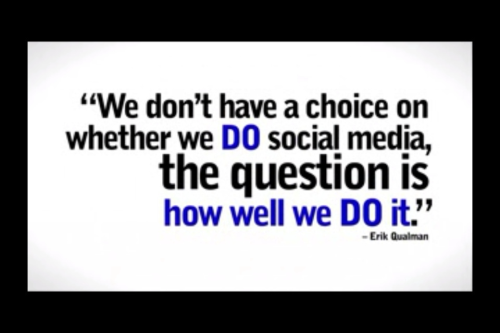
Social media is now part of how organizations, companies and
society operate. Organizations big and small, urban and rural, tech savvy and
tech adverse, can no longer ignore or avoid the importance and impact of social
media. As I continue to explore what ICT can mean for rural development, the
role of social media is quickly becoming a central part of that exploration. As
a result, I am increasingly immersed in social media, expanding beyond the
longtime facebook presence and establishing more comprehensive profiles and a more active presence in the other main networks including Google+, LinkedIn, Twitter and
most recently Pinterest.
Not surprisingly my network of colleagues, friends and
family have also been increasing their engagement in social media and I have quickly
found that I many of the same connections online as I have offline.
However, one of the main differences with social networking is that it is designed
to expand your network beyond those people you know face to face, while also
greatly facilitating the exchange of knowledge, ideas and even people.
Now, in addition to my current ‘real-world’ or offline
network, I have in my ‘circles’, am ‘following’, ‘friends with’, ‘connected-to’,
and ‘re-pin’ leaders and practitioners in development, research, technology and
even spirituality. The knowledge that flows through my social network on a daily
basis is very informative and inspiring. The
network of experts and practitioners at my fingers tips to learn from and share
with grows daily and far exceeds what I could’ve achieved a few short years
ago before social media. All of this has affirmed that rural communities and
organizations need to insure that they are also on the social media bandwagon
as the dangers of missing it are now too significant to ignore.
The Social Media
“Push”
One of the key benefits of social media is the ability to
easily and effectively share information, knowledge and ideas with others.
Rural communities are no longer affected by being isolated from
networks, businesses, stakeholders or even prospective residents. Social media
allows rural communities and organizations to promote themselves and to
share their information in a much more effective manner than ever before. As an
example, a rural community that posts an event on their website relies on users
to come to the website to be aware of the event. While websites are still a very important tool, social media creates a dynamic network of interested
participants who are waiting for information to be sent to them and many of whom are
willing and wanting to forward that information to their extended networks. A
study by the market research company AYTM study indicates that 57% of users on
facebook have more than 100 friends and 25% of users on twitter have more than
100 followers; the community event notice can reach thousands of people through
social networking in the time it takes dozens to visit the community
website.
The Social Media
“Pull”
For those communities and organizations that are not
producing lots of content or not ready to share information regularly, social
media provides a window into a cycle of knowledge exchange, idea generation and
discussion that is seemingly endless in terms of the topics available and in
the constant evolution of this content. Social networks are a fantastic source
of knowledge and you can find participants, experts and groups of participants
and experts that provide a wealth of information. Through social media, rural
communities and organizations can easily follow the latest discussions on
relevant topics and be up to date on news, events and announcements related to
them or their economies. Rural businesses can know what their customers want
and what their competition is doing as it happens.
The Social Media “Access”
to Talent
One of the most significant indicators of the importance of
social media, is the rapid evolution of employee recruitment and hiring. According
to Careerenlightnement.com an amazing 91% of companies are now using social
media in some manner for recruiting. Recruiters are using social media,
primarily facebook and LinkedIn, to verify qualifications, to get a better
understanding of applicants’ interests and expertise and to determine if there
are any potential character issues. Many companies are basing decisions on what
they find as 68% of companies having hired or rejected applicants based on
social media. As a result, job hunters are focusing their job searches,
networking efforts and communication activities on social media. If rural
companies and communities are not engaged in social media, they are going to
find that talent is harder and harder to find as potential employees are no
longer searching and applying for jobs in the same manner any more.
Sources

Monday, 2 January 2012
Playing catch-up: putting rural ICT in perspective
The more I explore and practice rural development, the more
I am convinced that Information and Communication Technology (ICT) is a core pillar of development for rural areas, not
only creating new opportunities for rural communities but necessary in able to
keep pace and participate in the increasingly Internet
and knowledge-based economy. As I research ICT in rural Manitoba, I’m
always trying to data sources that help put the quality of Internet access in
perspective for rural areas. Recently, I came across a fantastic resource for
benchmarking and comparing rural Internet access and speeds, Ookla’s Net Index.
The Net Index is a real
time, comprehensive assessment of broadband speed and value. Populated by the
popular Speedtest.net and Pingtest.net Internet testing sites, Net
Index provides results for download speeds, upload speeds, broadband costs and
even explores the difference between promised speeds and actual speeds. Understanding
the different aspects and speed levels of Internet access creates a much more
informed discussion around rural Internet
In addition to its detailed measures for Internet speed, Net
Index also creates a comprehensive geographical profile as well with results
available and comparable between city and province, and from national to
international. While it does not let rural Manitobans identify their specific towns,
villages or locations, it does provide detailed results for the province as a
whole as well as the urban centres, allowing more specific and localized
comparisons than most broadband metrics and repots. While it does not capture
use or capacity and does not yet provide results for small, rural areas, Net
Index establishes an important benchmarking and comparison tool for Internet
speed and value.
Using Net Index then, we are able to create a detailed
overview of Internet access in Manitoba and Canada. For a rural context, it is
worth remembering
that Canada has not established a new target for rural Internet access and that
it currently sits at 1.5Mbps, well below global averages and comparable to many
developing countries. The results below provide Winnipeg, Manitoba and Canada
Internet levels along with comparisons to global averages and leaders, creating
clear targets and comparisons for rural communities and residents.
The results illustrate that Canada has average Internet access overall,
but is well behind global leaders, especially in upload speeds. Additionally
Manitoba is slightly below the Canadian average in every category. Finally,
Winnipeg is above the provincial average in every category and above the
national average in all but one category.
Internet Download Speed
- Global average = 9.88 Mbps (Global Leader: Estonia = 55.61 Mbps
- Canada average = 12.29 Mbps (Global ranking = 33rd)
- Manitoba average = 11.27 Mbps
- Winnipeg average = 13.61 Mbps
Internet Upload Speed
- Global Average = 3.71 Mbps (Global Leader: South Korea = 27.65 Mbps)
- Canada Average = 1.82 Mbps (Global ranking = 65th)
- Manitoba Average = 1.60 Mbps
- Winnipeg Average = 1.81 Mbps
Internet Cost/Mbps
- Global average = $9.74 USD/Mbps (Global Leader: Bulgaria = $.64 USD/Mbps)
- Canada average = $5.86 USD per Mbps (Global ranking = 33rd)
- Manitoba average = $5.66 USD per Mbps
- Winnipeg average = $4.39 USD per Mbps
Internet Promise
Index – comparison
between the promised Internet speeds and the actual results (100% would meant
that actual speeds are equal to promised speeds)
- Global average = 86.28% (Global Leader: Slovakia = 100.76%)
- Canada average = 88.32% (Global ranking = 33rd)
- Manitoba = 87.71%
- Winnipeg average = 87.85%
All data was provided
by www.netindex.com on January 1, 2012
and covered a data range from July 2, 2009 to December 31, 2011.
Subscribe to:
Posts (Atom)